Category5 subjects · 51 pages
Outer Space Coloring Pages
Planets, rockets, astronauts and friendly aliens, from one big smiling rocket for preschoolers to detailed solar system scenes for older kids, teens and adults.
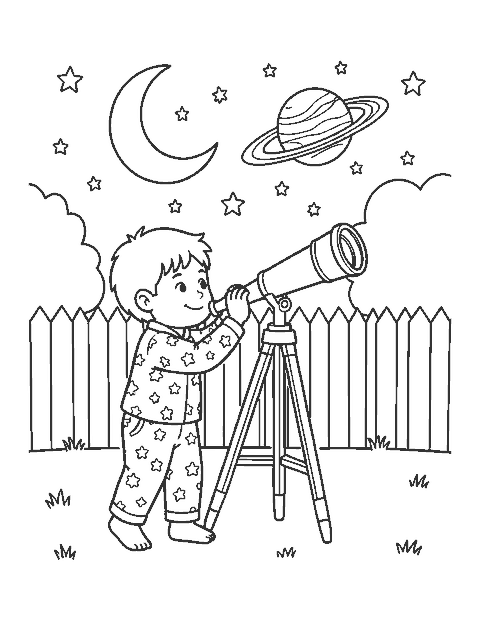
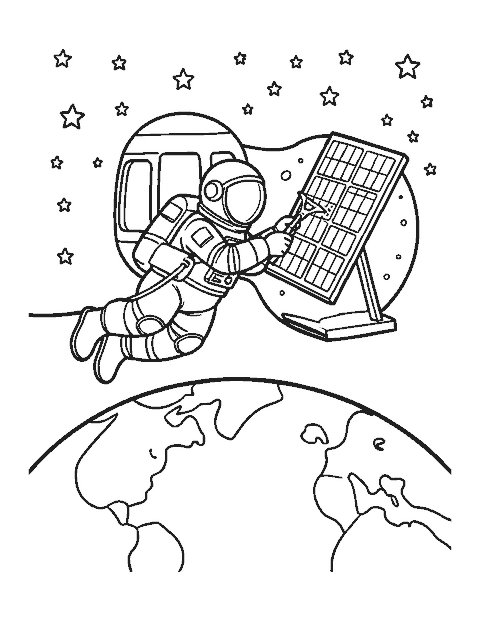
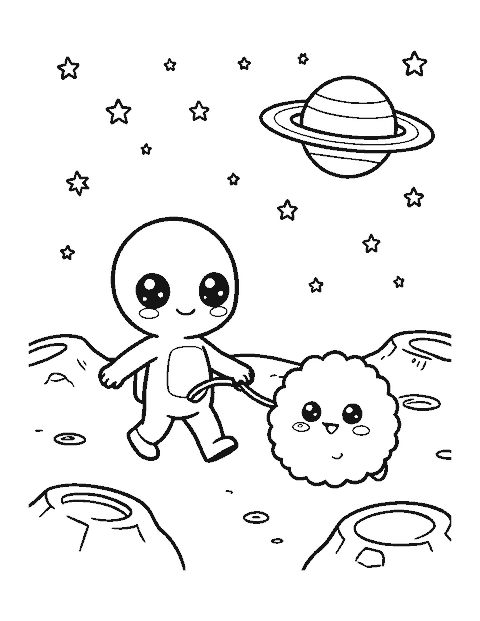
A few detailed favorites
Every subject also has big, bold Easy pages for small hands.
About our outer space coloring pages
Our outer space coloring pages cover the whole trip: planet coloring pages and solar system scenes, rockets and astronauts, and cheerful aliens. Easy pages for ages 3–5 show one rocket or planet with big outlines, Medium (6–8) adds a simple setting, Hard (9+) fills the sky with detail, and Expert adds patterned planets and starfields for teens and adults.
The pages carry no printed labels, which makes them handy in science lessons: after coloring, students write the planet names themselves, in order from the Sun. A finished set also makes a quick classroom mobile. Color the planets, cut them out and hang them from a coat hanger with string.
Rocket fans and future astronauts can collect their favorites in a print pack, or download any single page as a Letter or A4 PDF or a PNG.
Quick tips
- Leave the stars white and color the sky around them deep blue or black.
- Print planets on card stock, cut them out and hang them as a mobile.
- Have kids write planet names on the page after a solar system lesson.
Outer Space Coloring Pages: questions and answers
Are the planets labeled?
No. Our designs never include printed words, so planets are unlabeled. That turns any solar system page into a quick check after a lesson: kids color each planet, then write in the names in order from the Sun. It also lets younger children simply enjoy the shapes.
How many planets are in the solar system?
Eight: Mercury, Venus, Earth, Mars, Jupiter, Saturn, Uranus and Neptune. Pluto was reclassified as a dwarf planet by the International Astronomical Union in 2006. Jupiter is the largest planet, and Mercury is both the smallest and the closest to the Sun.
What colors should the planets be?
For a realistic look, use red-orange for Mars, whose dust is rich in iron oxide, bands of cream, tan and orange for Jupiter, pale gold for Saturn, blue for Neptune and pale blue-green for Uranus. Earth needs blue oceans, green and brown land and white clouds.