Animals8 original designs
Alligator Coloring Pages
Free printable alligator coloring pages with a hatching baby, a crocodile on a riverbank, a cypress swamp and a doodle croc, from easy to expert. Download as a PDF.
Easy alligator coloring pages
Ages 3–5 · Big shapes and thick outlines for small hands.
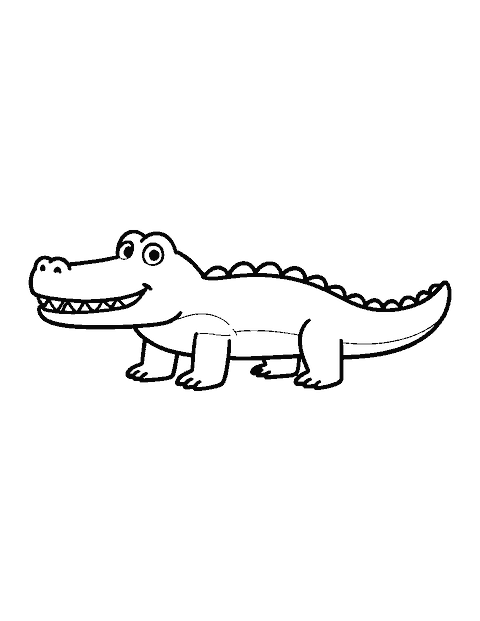 Smiling Alligator With a Bumpy BackEasyAges 3–5
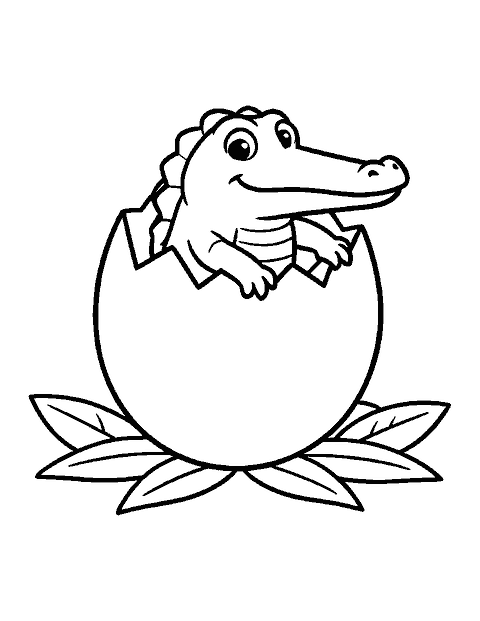 Baby Alligator Hatching From an EggEasyAges 3–5
More Easy pages from every subject: Coloring Pages for Kids · Easy Coloring Pages · Preschool Coloring Pages
Medium alligator coloring pages
Ages 6–8 · A clear subject with a simple scene around it.
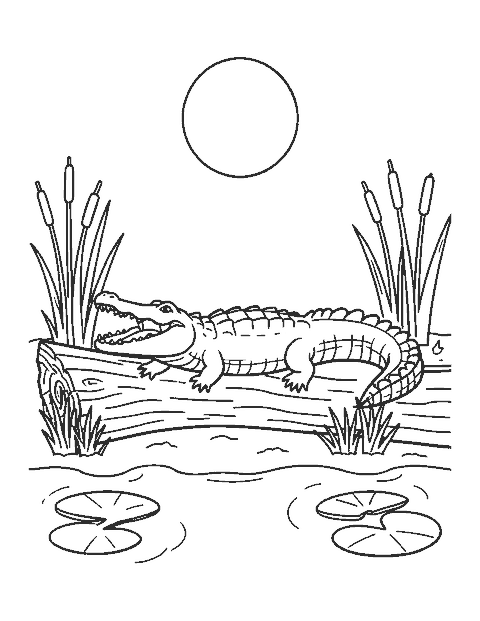 Alligator Sunning on a Riverbank LogMediumAges 6–8
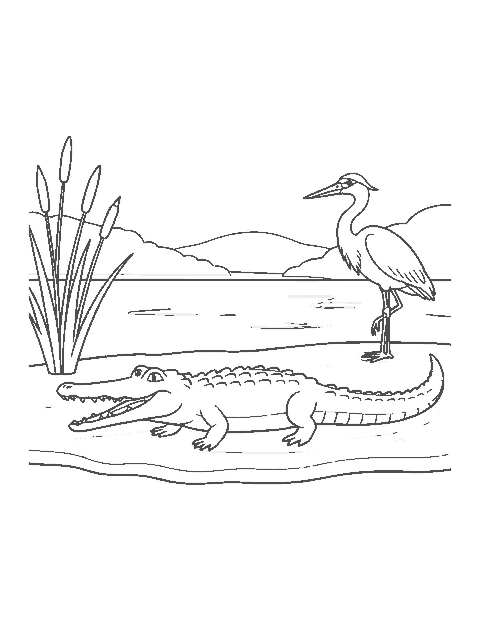 Crocodile With a Pointed Snout on a RiverbankMediumAges 6–8
More Medium pages from every subject: Coloring Pages for Kids
Hard alligator coloring pages
Ages 9+ · Full scenes with smaller spaces to fill.
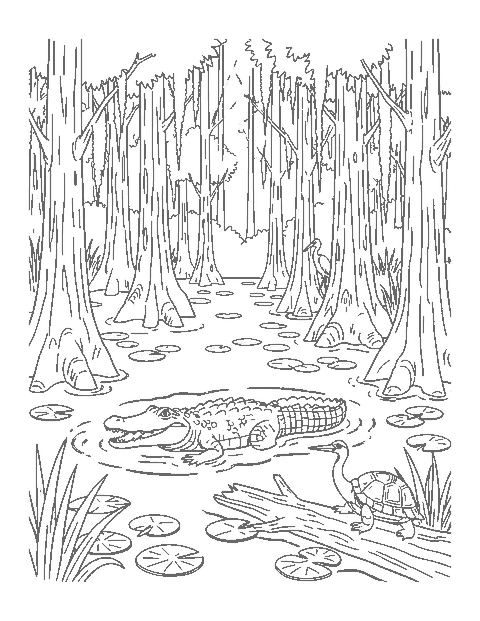 Alligator Gliding Through a Cypress SwampHardAges 9+
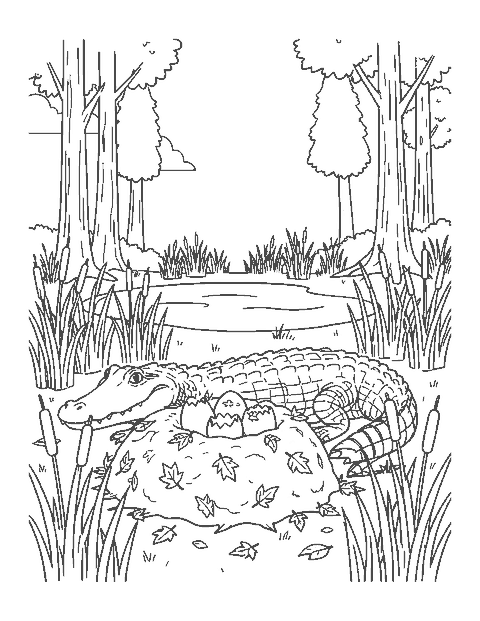 Mother Alligator Guarding Her NestHardAges 9+
Expert alligator coloring pages
Teens & adults · Intricate patterns and fine line work.
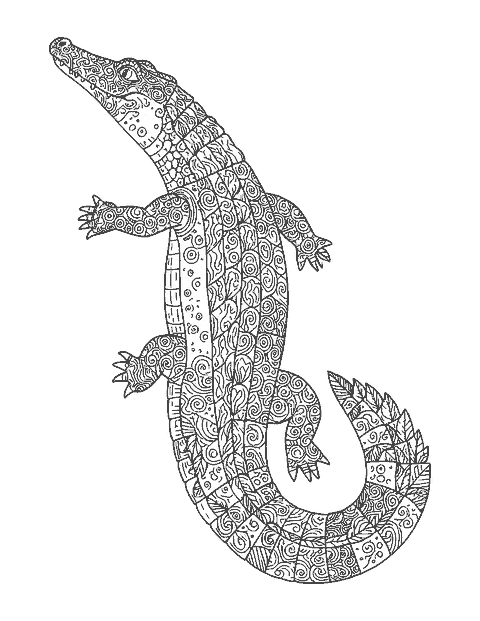 Crocodile Covered in Doodle PatternsExpertTeens & adults
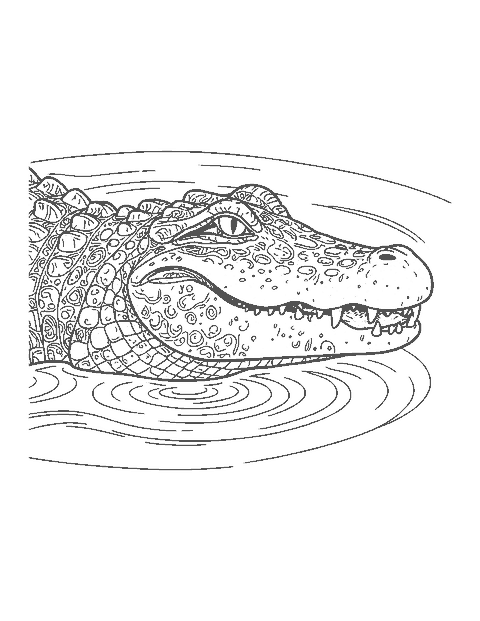 Detailed Alligator Head Close-UpExpertTeens & adults
More Expert pages from every subject: Adult Coloring Pages
About these alligator coloring pages
Alligators and crocodiles share these alligator coloring pages, from a baby hatching out of its egg to a mother guarding her nest. Ages 3 to 5 can color a smiling alligator with a bumpy back or that baby alligator. Kids ages 6 to 8 get an alligator sunning on a riverbank log with its jaws open and a crocodile with a long, pointed snout, and ages 9 and up can explore a cypress swamp.
Teens and adults can try the doodle-pattern crocodile and a detailed alligator head close-up. Before kids color, set the easy alligator next to the crocodile page and ask them to spot the difference in the snouts. It makes a quick compare-and-contrast warm-up for a reptile or wetlands unit.
Alligator facts to share
- Alligators have a wide, rounded U-shaped snout, while most crocodiles have a narrower, pointed V-shaped one.
- An alligator's eyes and nostrils sit on top of its head, so it can see and breathe while the rest of its body stays underwater.
- Whether a baby alligator hatches as a male or a female depends on how warm its nest is.
Color idea: Layer olive green, gray-green and brown over the bumpy back, keep the belly cream, and give the swamp scenes soft greens with blue water and pale hanging moss.
Alligator coloring page questions
How can kids tell an alligator from a crocodile?
Look at the snout. Alligators have a broad, rounded snout, and when the mouth is closed mostly the top teeth show. Crocodiles have a long, pointed snout with teeth showing along both jaws. Compare the easy smiling alligator with the medium crocodile on a riverbank.
Which alligator pages work for preschoolers?
The easy smiling alligator with a bumpy back and the baby alligator hatching from an egg. Each has a single big animal with simple shapes and almost no background for ages 3 to 5.
What colors should I use for an alligator?
Adult alligators are olive green to nearly black on top with a cream belly, and babies have bright yellow bands across their bodies and tails. Crocodiles tend to be lighter, from olive to tan, so a mix of greens and browns works for both.
More coloring pages to try
All animals pages Dinosaur Coloring Pages23 pages · 4 levels
 Cat Coloring Pages24 pages · 4 levels
 Dog Coloring Pages24 pages · 4 levels
 Bunny Coloring Pages24 pages · 4 levels
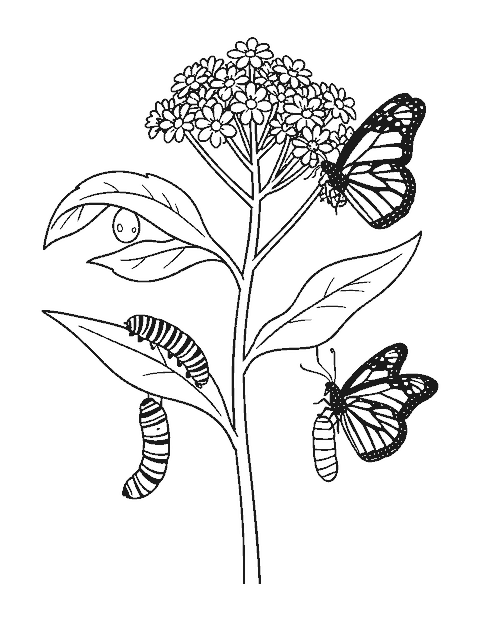 Butterfly Coloring Pages24 pages · 4 levels
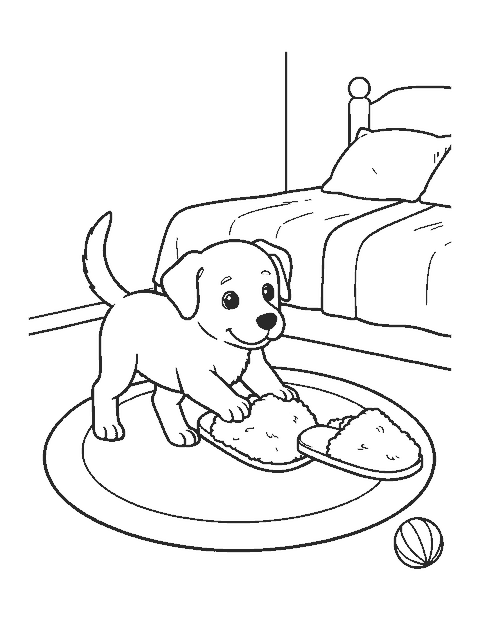 Puppy Coloring Pages16 pages · 4 levels
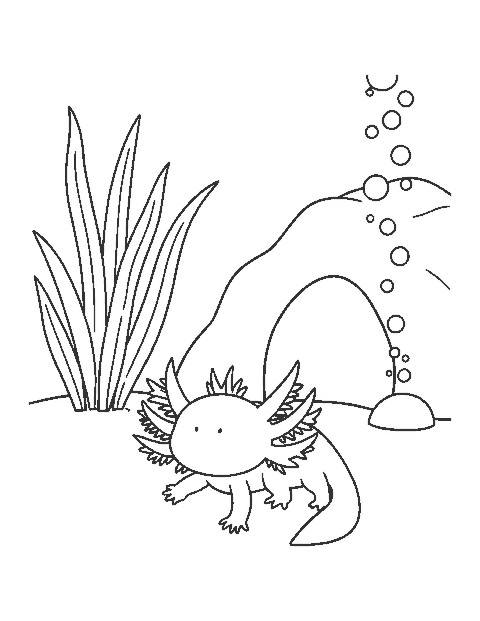 Axolotl Coloring Pages16 pages · 4 levels
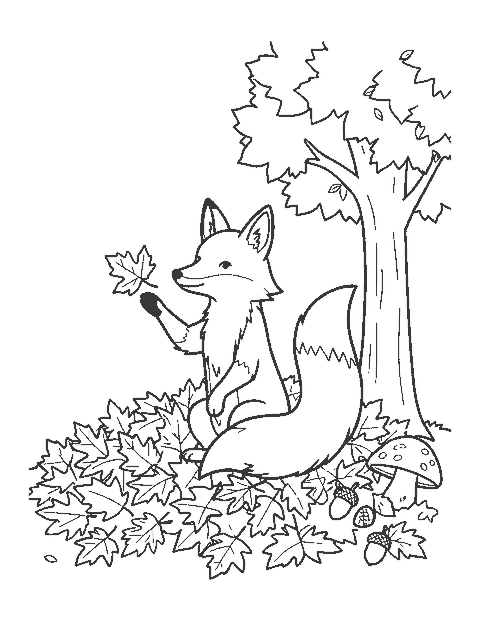 Fox Coloring Pages16 pages · 4 levels
 Tiger Coloring Pages16 pages · 4 levels
 Lion Coloring Pages16 pages · 4 levels